Short answer: If your website gets traffic but no walk-ins, the cause is usually local SEO, not the website itself. People are finding you, but not the people who live nearby. To fix it, use your city and neighborhood on your service pages, complete your Google Business Profile, collect reviews every week, and get listed in local directories and publications.
Definition you can quote: Local SEO is the work that helps a business show up when people nearby search for what it offers, through local keywords, a complete Google Business Profile, reviews, directory listings and local links.
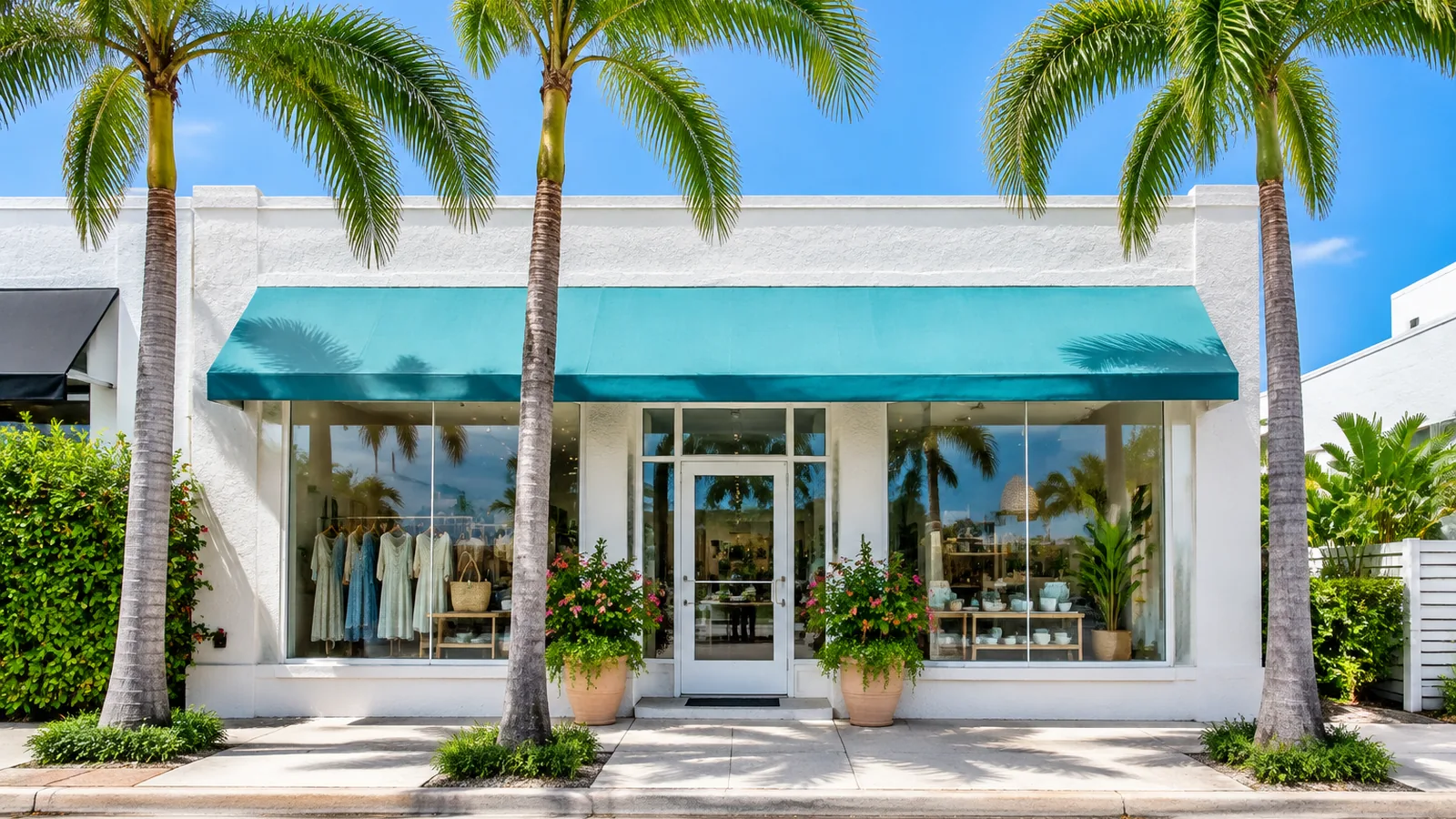
We hear this a lot from local businesses: "We get website traffic, but nobody comes in." A med spa we spoke with recently had exactly this problem. Their online store got plenty of visitors, but very few people walked into the physical location. They weren't sure what was causing it or what to fix first. In most cases like this, the website doesn't need a redesign.
Why does a website get traffic but no walk-in customers?
Because traffic and walk-ins come from different kinds of searches.
Someone searching for a product or a general question can be anywhere in the country. They might read your page, buy online or leave, but they were never going to visit. Walk-ins come from local searches: "[service] near me," "[service] in [city]," "best [business type] in [town]." Those searches are answered by the Google map results, your Google Business Profile, your reviews and pages that clearly tie what you do to where you are.
A site can do well on the first kind of search and be almost invisible on the second. When that happens, more traffic won't help. You need more of the right, local traffic.
What's the first thing to check?
Whether the business has done any local SEO at all. When a business tells us "we get traffic but nobody comes in," that's almost always the gap. Here's what local SEO covers:
- Local keywords. Use your city or town on your service pages, plus your neighborhood and nearby landmarks or streets where it reads naturally ("two blocks from [landmark]"). Don't stuff them in. Write the way you'd give a customer directions.
- Your Google Business Profile. Make sure every service you offer is listed, not just a few, and the hours, photos and categories are correct.
- Reviews. A steady flow of recent reviews, not a burst of them once a year.
- Directories and listings. Yelp and other local directories, with the same name, address and phone number everywhere, so people nearby can find you wherever they search.
- Local backlinks. Links from local sites, publications and organizations that tell Google you're part of the community.
Google says local results are based mainly on relevance, distance and prominence. Every item on that list feeds one of those three.
What we did for our own business: we listed ourselves on Yelp, Bing Places, Foursquare, OpenStreetMap, Patch, Alignable, Hotfrog, Brownbook, Cylex and Clutch, with the same name, address and phone number on every one, and we keep our own Google Business Profile up to date. Most of those listings are free. They take an afternoon, and each one is another place a nearby customer can find you.
Does a local business need a website redesign to get more foot traffic?
Usually not. With that med spa, we recommended leaving the design and the store alone, because they were already working, and making targeted changes instead. A redesign can put the traffic you already have at risk, and it doesn't fix a local visibility problem.
There's one website fix we do see often, though: important information hidden where search engines can't use it.
Is your website hiding your services?
On the med spa site, seven services and four or five providers were shown only in popups. Popups look great, but a popup isn't a page. It has no URL of its own, so it can't rank for "[service] in [city]," and AI search can't link to it. Google can read some content that loads with JavaScript, but Google's guidance is to make important content easy to crawl.
The fix is a real page for each service and each professional you work with. It can be linked from the main menu or just the footer. What matters is that it exists as its own page, is in your sitemap and isn't blocked in robots.txt. Our post on whether ChatGPT can read your website shows a quick way to check.
What should each local service page include?
| Element |
What it looks like |
Why it matters |
| Short description |
A couple of sentences, a paragraph at most, with no fluff |
Gives people, Google and AI search a clear answer |
| Pricing |
One price is best; a range is fine. Anything beats nothing |
Price is one of the first things people want to know |
| Location |
The service plus your city in the title and heading |
Ties the page to local searches |
| Who does it |
A link to the provider or team member |
Shows real, credentialed people |
| Schema markup |
Structured data describing the service and business |
Helps search engines understand the page |
| Sitemap and robots.txt |
Listed in sitemap.xml, allowed in robots.txt |
Makes sure the page gets found |
| One clear next step |
Book, call or get directions |
Turns a reader into a visit |
The goal is transparency: make everything easy to read for people and for Google and AI search. We covered the pricing question in more detail in should a skincare studio show prices on its website.
How can a small business get local backlinks on a small budget?
Pitch your local magazine or news site a unique story. That doesn't have to be anything dramatic. It's anything new or different about you:
- You just moved to the area
- You're a local owner
- You have a new way of doing things
- You use technology others nearby don't
- Something about your background or experience
For us, the story is that we're local, we deliver value at a good price, we take customer service seriously, and our clients are showing up in AI search. Every business has an angle like that. Find yours, and pitch it to the publications your customers actually read.
You can also answer journalist requests on free platforms like Connectively. That's how we got our first press quote this month, in CMO Times (it's also in the "In the press" section on our homepage). It's not a local outlet, but it's the same idea: share something real you know, and you earn a mention and a link. Locally, we started with a free business listing on Patch.
Along with that, make sure your information is on listing sites like Yelp. Each one is another place people nearby can find you, and another link back to your site.
What's the one thing to do this week?
Put every service you offer on your Google Business Profile, and start working on getting reviews. The simplest system is a thank-you email after every visit with a direct link to leave a Google review, sent every time, not just when someone remembers.
Walk-In Traffic Checklist