Short answer: A small business website checklist for 2027 comes down to 10 checks: say what you do on the first screen, give every service its own section, show prices and hours as text, show real people, attach names to proof, answer real questions in an FAQ, offer one next step, work on a phone, stay current, and stay readable by Google and AI search.
Definition you can quote: A 2027-ready website is one a customer, Google or an AI assistant can read in under a minute and come away knowing what you do, who it's for, what it costs, who's behind it and how to take the next step.
What's different about a small business website in 2027?
Less than the headlines suggest. Google now answers many searches with AI Overviews and AI Mode, and assistants like ChatGPT answer "who should I call?" questions, and they lean on what websites say. But Google says there are "no additional requirements to appear in AI Overviews or AI Mode, nor other special optimizations necessary." [1] A page just has to be indexed and eligible to show in Search with a snippet.
So the 2027 checklist isn't a list of new tricks. It's the basics, done completely, because an AI summary only repeats what your site actually says. If your prices live in a PDF, your hours are in an image and your services page says "we do it all," there's nothing clear to repeat.
The examples below come from sites HUNTR built: Quantum Age, Skincare by Flora, RiseUp Hoops and New Hustle Sports.
The 2027 small business website checklist
| # |
Check |
Why it matters in 2027 |
Example from a site we built |
| 1 |
The first screen says what you do, who it's for and where |
Visitors and AI tools decide fast whether you fit |
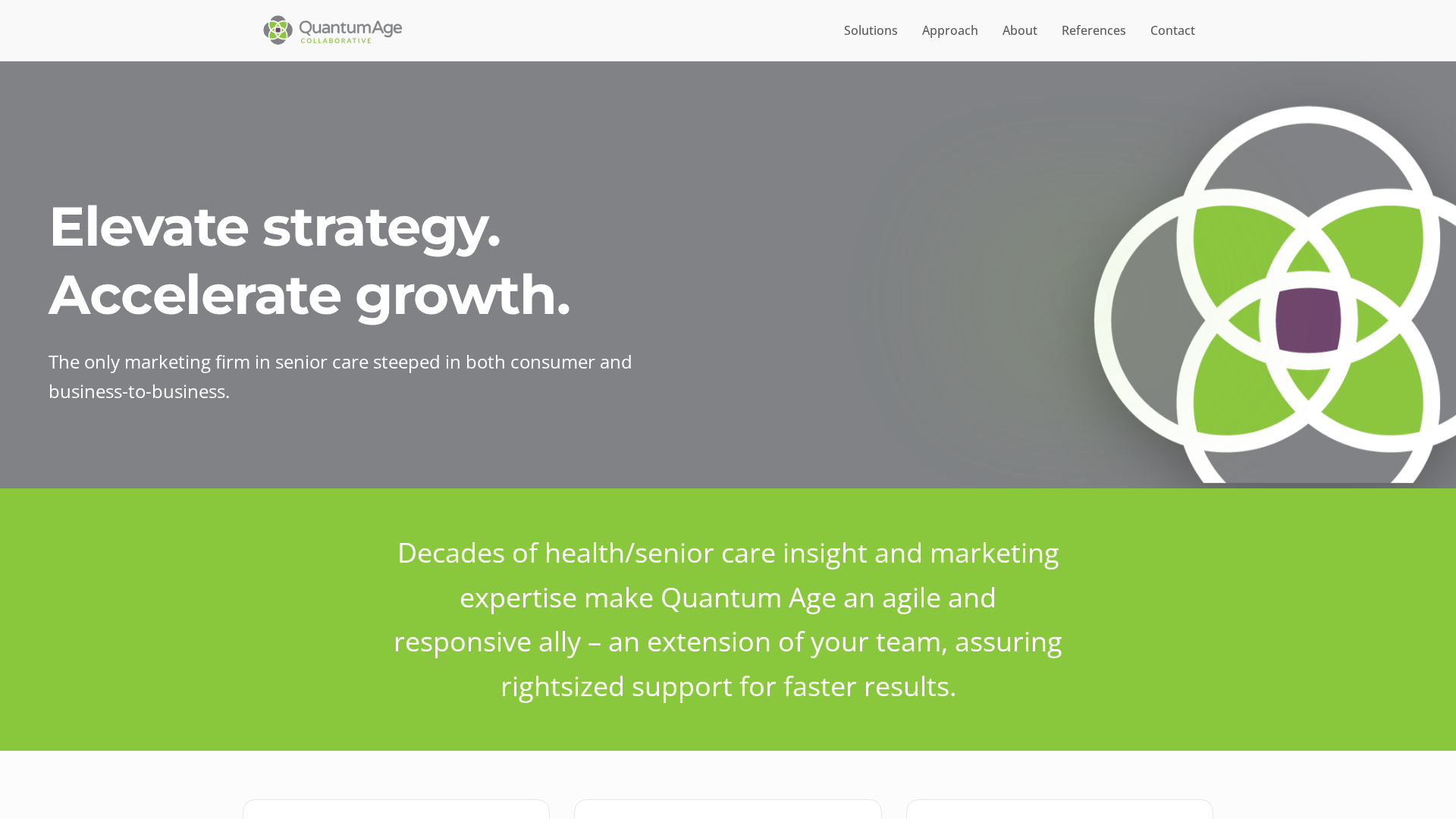
Quantum Age's homepage says right away that it's a senior care marketing firm for both consumer and business-to-business audiences |
| 2 |
Every service has its own page or section, in plain words |
A vague services page can't answer "do they do X?" |
Quantum Age lists six services on one page, each with a short list of what's included |
| 3 |
Prices (or "by consultation"), hours and contact are typed text, up front |
Text can be read, quoted and matched to your Google Business Profile |
Skincare by Flora puts pricing, hours and contact up front: "No hunting for the basics." |
| 4 |
Real people with names, photos and short bios |
Buyers want to know who they'd be working with |
Quantum Age has team members with photos and short bios |
| 5 |
Proof with names attached |
Unattributed praise is easy to ignore |
Quantum Age shows named testimonials from leaders at The Green House Project, the Nevada Board of Examiners for Long Term Care Administration and Prime Care Technologies |
| 6 |
An FAQ that answers the questions people actually ask, in the page text |
FAQs are the easiest part of a site for search and AI to lift |
Flora's site keeps all business information and FAQs in the page HTML so Google and AI search can read it |
| 7 |
One clear next step, without phone tag |
Every extra step loses someone |
New Hustle Sports has a contact form and WhatsApp; Quantum Age uses "Start the Conversation" throughout |
| 8 |
Built for the phone first |
A referred customer often checks you on a phone first |
RiseUp Hoops was built mobile-first, for parents on their phones |
| 9 |
Kept current, with no last-season content |
An AI summary can repeat old hours or a finished event |
RiseUp's new camps, flyers and events go live as soon as they're announced |
| 10 |
Readable by Google and AI search |
If crawlers can't read it, it can't be found or quoted |
Google's own list: allow crawling, use internal links, keep important content as text, make structured data match the visible text, and keep your Business Profile up to date [1] |
Which of these do small business sites miss most?
Across the four case studies above, three gaps came up before the rebuild.
No real "who's behind it." Before HUNTR, Quantum Age's site was generic and out of date. It didn't show how well the firm knows senior care or who a buyer would be working with. Team bios and named references fixed both (checks 4 and 5). [2]
No home at all. New Hustle Sports, a fast-growing Israeli basketball agency, had no website. Players, families and clubs had no way to see who the agency represented or how to reach it. The new site added athlete profiles, signings, services and direct contact (checks 1, 2 and 7). [3]
A site that falls behind the business. RiseUp Hoops' old site "looked like any other template," and keeping camps and events current "was a hassle." Now the site is updated constantly, so families always see what's next (checks 8 and 9). [4]
How do you run this checklist in 15 minutes?
- Phone test (5 minutes). Open your homepage on your phone. Without scrolling, can a stranger tell what you do, where you are and how to contact you? That's checks 1, 7 and 8.
- Copy test (5 minutes). Try to highlight your prices, hours and services with your finger. If you can't select the text, it's an image or a PDF, and search can't read it reliably (checks 3 and 10).
- Calendar test (5 minutes). Look for anything dated: a finished event, an old promotion, last year's hours, a "2025" in a page title. Fix or remove it (check 9).
Then ask an AI assistant "What does [your business name] in [your city] do, and how much does it cost?" If the answer is vague or wrong, the gaps in your checklist are usually why.
What should you fix first before 2027?
Fix in this order: anything wrong or out of date (check 9), then the basics people can't find (checks 1, 3 and 7), then trust (checks 4 and 5), then the FAQ (check 6). Wrong information costs you more than missing information, because a customer or an AI tool may repeat it.
If you're paying monthly for a website, these fixes should be part of what you get. We covered what a monthly fee should include in Do You Have to Pay Monthly for a Website?
What does a 2027-ready website cost with HUNTR?
HUNTR builds the website free. Foundation is $99/month for a site of up to 5 pages, with 2 content updates a month; Local SEO and AI search (AEO) aren't included. Visibility is $299/month for up to 10 pages, 4 content updates a month, Local SEO and monthly AEO. Growth Engine is $499/month for up to 15 pages and unlimited content updates. Every plan has a 12-month minimum term, and sites go live in 2 to 4 weeks. See current pricing, how our website service works, or run the free Digital DNA Test on the site you have now.
Sources
- Google Search Central, AI features and your website (last updated December 10, 2025)
- HUNTR, Quantum Age case study
- HUNTR, New Hustle Sports case study
- HUNTR, RiseUp Hoops case study
- HUNTR, Skincare by Flora case study
- HUNTR, Pricing